
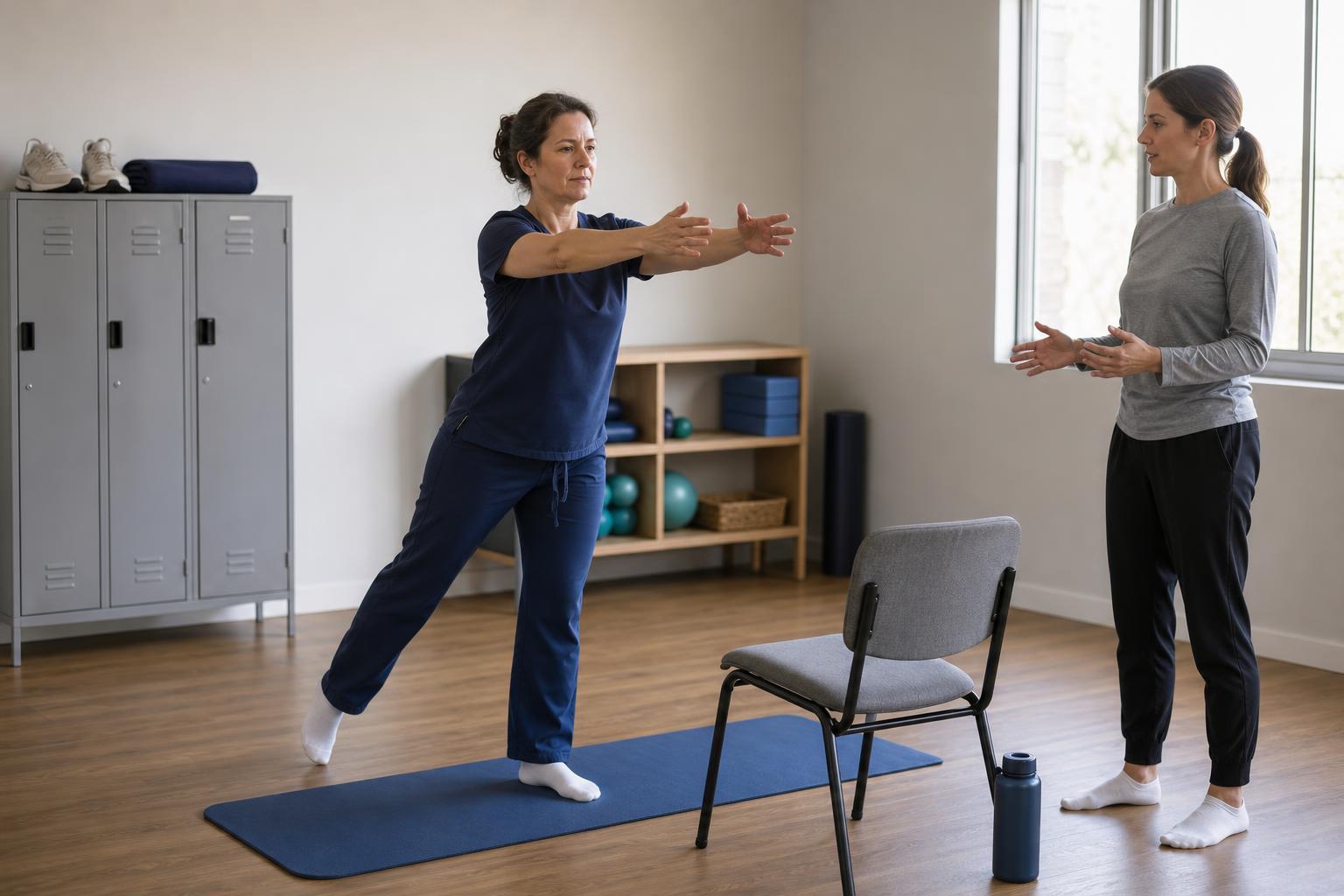
A new meta-analysis of 12 randomised trials found that workplace Pilates was associated with a moderate improvement in functional disability, while pooled effects on pain, muscular endurance and quality of life were not statistically significant.
A systematic review and meta-analysis published on 29 August 2026 examined whether Pilates programmes can improve health and physical function among working adults. Researchers from Aristotle University of Thessaloniki, Democritus University of Thrace and the University of Thessaly analysed 12 randomised controlled trials involving 582 participants from occupational groups including office workers, healthcare personnel and military helicopter pilots.
The strongest finding was a moderate, statistically significant reduction in functional disability. The pooled effect size was Hedges’ g −0.660, with a 95% confidence interval of −1.091 to −0.229. In practical terms, participants completing workplace Pilates programmes appeared better able to perform physical tasks or function despite occupational musculoskeletal problems.
The review did not find statistically significant pooled improvements in pain intensity, muscular endurance or health-related quality of life. Pain outcomes produced an effect size of −0.461 but were highly variable, while the endurance analysis showed extreme heterogeneity between studies. The authors also noted that all prediction intervals crossed the line of no effect, meaning results for future workplace programmes remain uncertain.
For Pilates professionals, the findings support a measured approach to workplace and occupational-health programming. Functional improvement may be a more reliable short-term outcome than claims of broad pain reduction or enhanced wellbeing. The review included different Pilates formats, durations, occupational settings and participant groups, making it difficult to identify an optimal programme. It also relied on relatively small evidence pools for some outcomes.
The study provides useful evidence for instructors working with employers, healthcare teams and physically demanding professions, but it does not establish that Pilates treats workplace injury or guarantees improved work capacity. Larger, better-standardised trials will be needed to determine which populations benefit most, how programmes should be delivered and whether improvements persist over time.
Read the full article:
Pilates in the Workplace: A Systematic Review and Meta-Analysis of Physical, Psychological, and Functional Outcomes in Employees
Image: AI-generated illustration.