
An Arizona State University study of more than 55,000 US adults found that Pilates participation was associated with a 36% lower risk of death over roughly a decade. Researchers stress that the observational findings do not prove Pilates caused the difference.
Pilates was one of only two complementary and alternative health practices associated with a meaningfully lower risk of death in a new population-level analysis from Arizona State University. The study examined nationally representative data from more than 55,000 US adults, linking reported practice habits with mortality records over approximately ten years.
Among 21 practices assessed, Pilates was associated with a 36% lower risk of death, while yoga was associated with a 27% lower risk. Other activities examined included acupuncture, massage, chiropractic care and homeopathy, but these did not show a significant association with mortality after the researchers adjusted for demographic and health differences between users and non-users.
The findings are relevant to Pilates professionals because they add to a still limited body of population-level evidence involving Pilates itself, rather than general exercise research being applied indirectly to the method. The study also highlights possible reasons Pilates participants may fare differently, including strength, balance, movement, breath work and the social benefits of group classes.
However, the results should not be presented as proof that Pilates extends life. The research was observational, so it cannot establish cause and effect. People who practise Pilates may already have healthier lifestyles, better access to healthcare or other advantages that were not fully measured. The study therefore supports further research, while offering instructors a useful reminder to describe Pilates benefits accurately and without promising longevity outcomes.
Read the full article:
ASU researchers find yoga and Pilates associated with longer lifespans
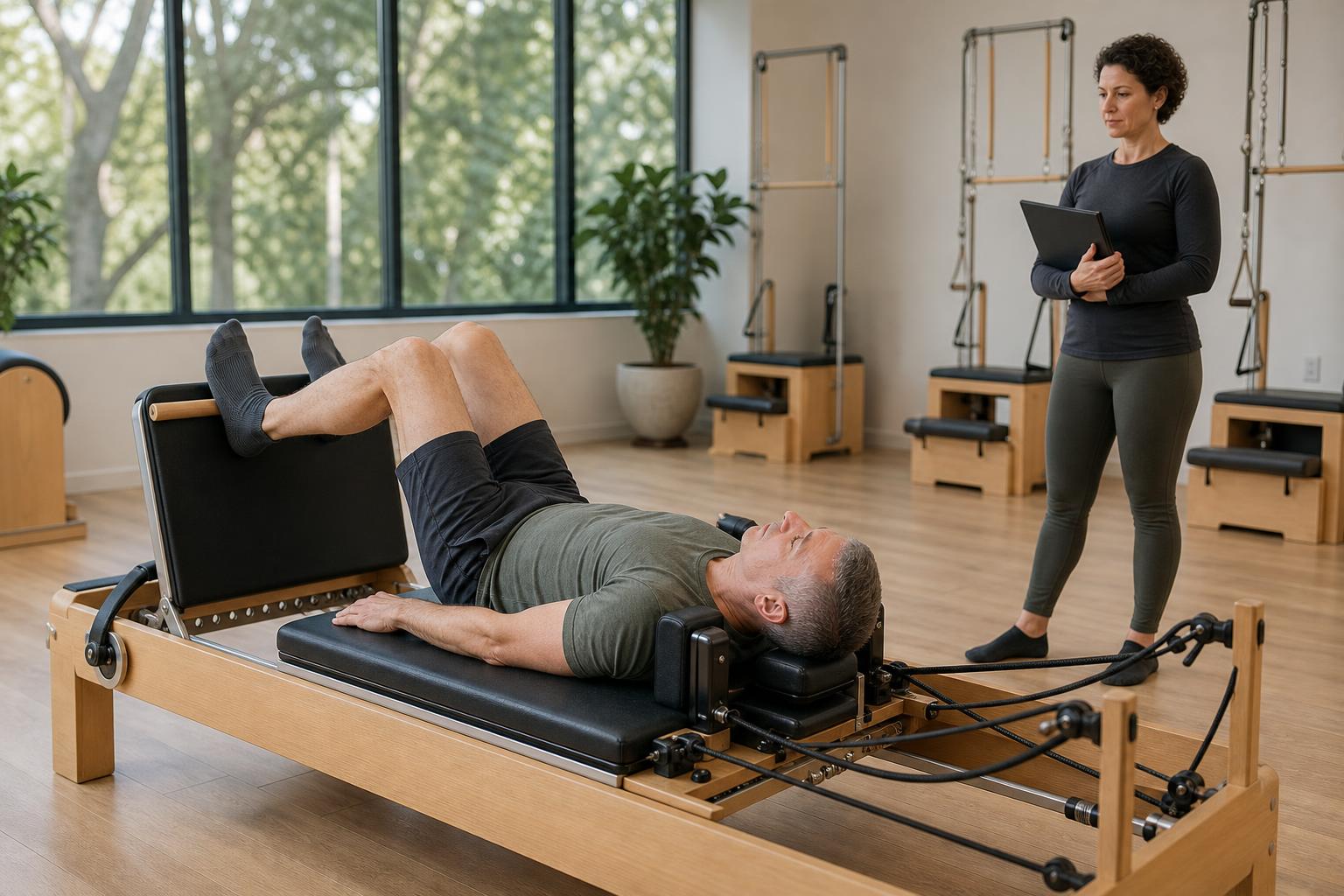
Image: AI-generated illustration.